Resources for Workspace Planning
Practical guides and frameworks to inform your workspace development decisions.
Space Planning Guidelines
Recommended square footage per person varies by workspace type. Coworking spaces typically allocate 50-75 square feet per member when accounting for shared amenities. Corporate offices range from 150-250 square feet per employee including circulation and support spaces.
Occupancy Ratios
Flexible workspaces operate on membership ratios. A common approach assigns 1.5-2.5 members per desk, recognizing that not all members use the space simultaneously. This ratio depends on your target market and membership structure.
Acoustic Standards
Open office areas should maintain ambient noise levels below 50 decibels for productive work. Meeting rooms require speech privacy with STC ratings of 45 or higher. Phone booths need STC 50+ to ensure confidential conversations remain private.
Lighting Requirements
Task lighting for desk work should provide 300-500 lux at the work surface. Combine overhead ambient lighting with individual task lights to allow personalization. Natural light access within 25 feet of windows significantly improves wellbeing.
Technology Infrastructure
Plan for robust connectivity with minimum 100 Mbps per 10 users. Provide power outlets every 6 feet along walls and integrated into furniture. Include video conferencing capabilities in all meeting spaces with quality cameras and microphones.
Building Code Considerations
Argentine building codes specify minimum restroom fixtures based on occupancy. Accessibility requirements mandate barrier-free routes and appropriate facilities. Consult local regulations early in planning to ensure compliance.
Common Workspace Zones
Open Desking Areas
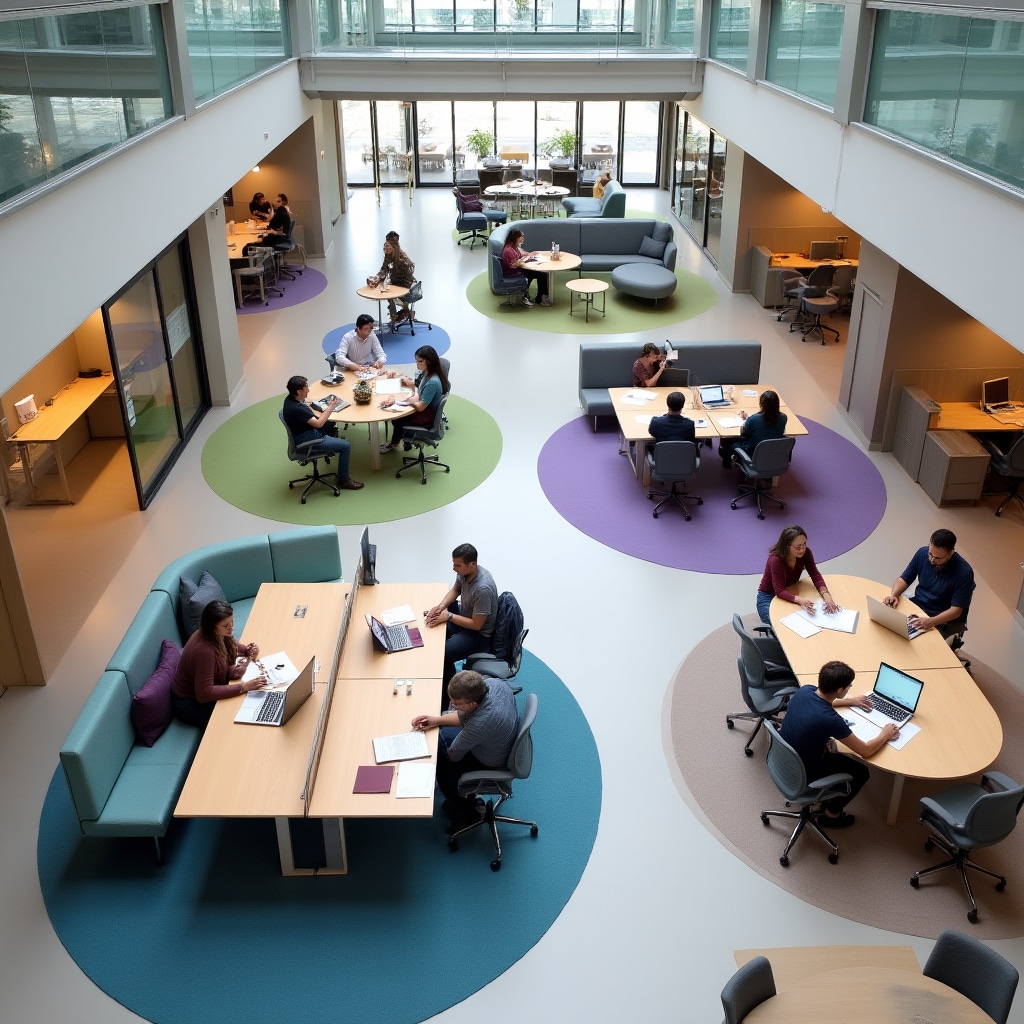
The primary workspace for most members. Design for flexibility with modular furniture that reconfigures easily. Include a mix of individual desks and shared tables to accommodate different work preferences.
Provide adequate personal storage through lockers or mobile pedestals. Consider sit-stand desks to support varied postures throughout the day. Ensure each position has access to power and data connectivity.
Private Offices
Enclosed spaces for teams or individuals requiring privacy. Glass partitions maintain visual connection while providing acoustic separation. Sizes typically range from 80-150 square feet for 1-4 people.
Meeting Rooms
Bookable spaces for collaboration and presentations. Equip with video conferencing technology, writable surfaces, and flexible furniture. Provide various sizes from 4-person huddle rooms to 12+ person conference spaces.

Environmental Considerations
Sustainable workspace design reduces environmental impact while creating healthier environments for occupants.
Material Selection: Choose low-VOC finishes, recycled content materials, and locally sourced products when possible. FSC-certified wood and recycled metal demonstrate environmental responsibility.
Energy Efficiency: LED lighting with occupancy sensors reduces electricity consumption. High-performance HVAC systems with smart controls optimize comfort while minimizing energy use.
Indoor Air Quality: Adequate ventilation and air filtration improve health and productivity. Introduce plants to naturally filter air and create biophilic connections.
Waste Reduction: Design for durability and adaptability to extend the useful life of spaces. Provide recycling stations throughout the facility to encourage responsible disposal.
Questions About Implementation?
We're here to help you navigate the complexities of workspace development.